Showing posts with label Chinese Virus. Show all posts

Monday, April 20, 2020

asmPolitics-336 [China Govt-linked Reporters At White House]


WASHINGTON, D.C., April 9, 2020 (LifeSiteNews) — Chinese reporters attending the White House’s daily coronavirus press conferences have twice this week evaded questions from U.S. president Donald Trump on their connections to the communist government in China.
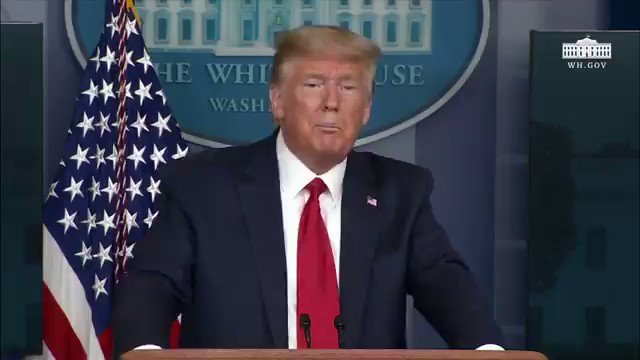
During Monday’s briefing, Trump clashed with a reporter from Phoenix TV, a network with links to the Chinese government.
“Only last week, there were multiple flights coming from China full of medical supplies,” the reporter said. “Companies like Huawei and Alibaba have been donating to the United States, like 1.5 million N95 masks and also a lot of medical gloves, and much more medical supplies.”
“Sounds like a statement more than a question,” Trump responded.
The reporter followed up by asking Trump if he is “cooperating with China” on securing medical supplies.
“Who are you working for, China?” Trump replied.
“I’m, no, I’m working for Hong Kong Phoenix TV,” the reporter responded.
When questioned by Trump if it was owned by the Chinese state, she replied, “It’s based in Hong Kong” and said the network is a “privately owned company.”
Texas Senator Ted Cruz responded to the exchange on Twitter, saying: “Phoenix TV has been waging information warfare in the US for yrs. They are nominally private but actually state owned. In 2018 I led effort to block them from using cutouts to spread propaganda. MSM should NEVER have given them seat at WH press conference.”
Cruz followed up with a series of seven more tweets, which he concluded by saying: “So to recap, the WH Correspondents Assoc gave a seat at the WH press briefing to an employee of the Chinese Communist govt, to ask globally televised Qs to POTUS, at the same time China is waging a propaganda campaign to hide their culpability & coverup of the Wuhan virus?!?”
Yesterday, Trump fielded a question from Ching-Yi Chang, a reporter for the Shanghai Media Group, one of the largest state-owned media groups in China.
”Reporter” Ching-Yi Chang, told @realDonaldTrump he is from Taiwan yesterday in the White House.

He was *born* in Taiwan.

But he *works* for Chinese state owned Shanghai Media Group – a propaganda arm of the Chinese Communist Party.

More here: https://thenationalpulse.com/politics/another-ccp-reporter-white-house-trump/ 

7,032 people are talking about this
Ching-Yi, who has also previously worked for Phoenix TV, said he was speaking “on behalf of foreign media group.”
His own Facebook and LinkedIn profiles show that he works for the Shanghai Media Group.

Image

Questioned by Trump where he was from, the reporter responded, “Taiwan.”
The exchange between the two was minimal on this occasion, with Trump giving a brief reply to a question about the French government giving medical aid to Iran, and then an extended response to a mention of Bernie Sanders having suspended his presidential campaign, before moving onto another reporter.
Writing at The National Pulse, British journalist Raheem Kassam says Ching-Yi didn’t want to disclose his employer “because it would reveal that he was yet another CCP propagandist inside the White House Press Briefing Room, and would highlight how Chinese operatives are within feet of the President of the United States.”
Readers can visit LifeSite’s homepage at 5:00 p.m. EST each day for a link to the day’s presidential live-stream. Press conferences are scheduled to begin then, but they often begin later.

Sunday, April 19, 2020

asmPolitics-329 [Wuhan Virus Death Toll]


April 6, 2020 (LifeSiteNews) – In January, people in Wuhan began dying of the novel coronavirus. Not long thereafter, disturbing pictures began to leak out of China showing hospital hallways crowded with the bodies of the dead, and vans loaded with body bags heading toward crematoria. Yet the rapidly rising death toll these pictures suggested was not reflected in the official death toll, which remained puzzlingly low.  
Now, I have long been skeptical of numbers coming out of China, which are always crafted with one goal in mind -- to make the Party and its leaders look good. So I began to look for other metrics that might give me a clue as to what the real death toll was. I found one answer in the ovens of Wuhan’s seven crematoria.
Understand that everyone who dies in China is cremated. Not long after the Communists took power in 1949, the traditional practice of burying the dead in coffins was outlawed on the grounds that it took land away from farming. This means that we can assume that the number of cremations equals the number of deaths.
By January 30th, the Wuhan authorities reported that only 170 people had died in Wuhan and the surrounding area. Yet two days before, on January 28th, they announced that they were “dispatching extra vehicles, staff, and protective gear to all of the local mortuaries.”  
Why?  
“To improve the capacity of transporting and dealing with corpses.” They also suddenly offered “free cremation for the corpses of coronavirus victims who died on January 26 or later.”
These actions made it obvious that the real body count was going up a lot faster than the official count. In fact, by all indications, the mortuaries were being simply overrun with corpses.  Wuhan mortuaries had to add night and weekend shifts to cope with the numbers. We know this because they posted “help wanted” advertisements online to recruit workers for night, swing, and weekend shifts. Also, for two full months during the height of the epidemic, from January 23rd to March 23rd, no funerals were held at the mortuaries, and grieving relatives weren’t even allowed to pick up the ashes of their loved ones.
So how many bodies were cremated during this time? Let’s crunch the numbers. The seven mortuaries in Wuhan proper have a total of 84 ovens. Assuming that each cremation takes two hours, that number of ovens could have reduced 1,008 corpses to ashes each day. At this rate, some 60,000 bodies could have been cremated over two months, from which we have to subject the normal non-epidemic related mortality of roughly 10,000. This gives us an estimated number of deaths from the Wuhan Coronavirus of 50,000.
Another estimate comes from the huge numbers of funeral urns being handed out.  
It was announced on March 23rd that grieving relatives would finally be allowed to come to the mortuaries to pick up the ashes of their loved ones. Long lines quickly formed outside of Wuhan’s mortuaries as people waited for hours to receive the remains of their loved ones lost during the epidemic. They were told that they must pick up the urns by April 4, a traditional holiday called Tomb Sweeping Day where Chinese memorialize their ancestors.
Investigative journalists from Caixin reported that funeral urns were being distributed at a rate of 500 a day at Wuhan’s seven mortuaries, meaning that a total of 3,500 urns were being handed out each day. Given that the window for picking up the urns was 12 days long, this would mean that 42,000 urns would be given out during that time. 
One photo published by Caixin shows a truck loaded with 2,500 urns arriving at the Hankou Mortuary. When questioned, the driver said he had delivered the same number of urns to the same mortuary the day before. Another photo shows stacks of urns inside the mortuary totaling some 3,500 urns. Taken together with the new shipment, the number of urns on hand at this one mortuary alone looks to be more than double Wuhan’s official death toll.
To buy the silence of the people, the Communist authorities have been handing out hush money. Wuhan resident Chen Yaohui told RFA that “There have been a lot of funerals in the past few days, and the authorities are handing out 3,000 yuan in hush money to families who get their loved ones' remains laid to rest ahead of Qing Ming," he said, in a reference to the traditional Tomb Sweeping Day on April 4. “It's to stop them from wailing,” Chen said, referring to a traditional form of mourning. “Nobody will be allowed to wail after Qing Ming has passed.”
As reported by Bloomberg, U.S. intelligence agencies have also concluded that Beijing falsified its numbers, although their report remains classified. And when President Trump was asked at his April 1 press briefing about China’s numbers, he responded that they “seem to be a little bit on the light side. And I’m being nice when I say that, relative to what we witnessed and what was reported.”
I think the president was being not just nice, but extraordinarily diplomatic, given Beijing’s ongoing deceit where the epidemic is concerned. Remember, we are talking about the same Communist Party that asserts no one died in Tiananmen Square, when the actual death toll from the Tiananmen Massacre was 10,000. This is the same CCP that asserts that no one died in the famine after the Great Leap Forward, when in fact 42.5 million people starved to death.
Bear that in mind when you consider the official Chinese government data for Wuhan, which show that only 2,535 people died from the disease, and only 50,006 people were infected. 
I think the official figures are understated by a factor of 20. That is to say, the real number of fatalities is perhaps 50,000. As for how many people were infected, if you assume a case fatality rate of 2 percent, then 2.5 million people in the city came down with the coronavirus.
Down to the present day, China continues to conceal the truth about the epidemic within its own borders by publishing false data. These are not harmless little white lies. They are lies that kill.  
Tens of thousands of people will die unnecessarily because the Communist Chinese authorities did not warn us about the seriousness of the epidemic in Wuhan and share the data that it was collecting about the spread and treatment of the disease. Tens of millions of others will suffer because the Communist Chinese sent the global economy into a recession. This, too, will cost lives that otherwise could have been saved.
There is a hashtag trending on Twitter that sums up the situation: #ChinaLiedAndPeopleDied
Steven W. Mosher @StevenWMosher is the President of the Population Research Institute and the author of Bully of Asia: Why China’s Dream is the New Threat to World Order.

Friday, March 20, 2020

asmPolitics-291 [China Virus Timeline]


Axios has compiled a timeline of the earliest weeks of the coronavirus outbreak in China, highlighting when the cover-up started and ended — and showing how, during that time, the virus already started spreading around the world, including to the United States.
Why it matters: A study published in March indicated that if Chinese authorities had acted three weeks earlier than they did, the number of coronavirus cases could have been reduced by 95% and its geographic spread limited.
This timeline, compiled from information reported by the Wall Street Journal, the Washington Post, the South China Morning Post and other sources, shows that China's cover-up and the delay in serious measures to contain the virus lasted about three weeks.
Dec. 10: Wei Guixian, one of the earliest known coronavirus patients, starts feeling ill.
Dec. 16: Patient admitted to Wuhan Central Hospital with infection in both lungs but resistant to anti-flu drugs. Staff later learned he worked at a wildlife market connected to the outbreak.
Dec. 27: Wuhan health officials are told that a new coronavirus is causing the illness.
Dec. 30:
  • Ai Fen, a top director at Wuhan Central Hospital, posts information on WeChat about the new virus. She was reprimanded for doing so and told not to spread information about it.
  • Wuhan doctor Li Wenliang also shares information on WeChat about the new SARS-like virus. He is called in for questioning shortly afterward.
  • Wuhan health commission notifieshospitals of a “pneumonia of unclear cause” and orders them to report any related information.
Dec. 31:
  • Wuhan health officials confirm 27 cases of illness and close a market they think is related to the virus' spread.
  • China tells the World Health Organization’s China office about the cases of an unknown illness.
Jan. 1: Wuhan Public Security Bureau brings in for questioning eight doctors who had posted information about the illness on WeChat.
  • An official at the Hubei Provincial Health Commission orders labs, which had already determined that the novel virus was similar to SARS, to stop testing samples and to destroy existing samples.
Jan. 2: Chinese researchers map the new coronavirus' complete genetic information. This information is not made public until Jan. 9.
Jan. 7: Xi Jinping becomes involved in the response.
Jan. 9: China announces it has mapped the coronavirus genome.
Jan. 11–17: Important prescheduled CCP meeting held in Wuhan. During that time, the Wuhan Health Commission insists there are no new cases.
Jan. 13: First coronavirus case reported in Thailand, the first known case outside China.
Jan. 14: WHO announces Chinese authorities have seen "no clear evidence of human-to-human transmission of the novel coronavirus."
Jan. 15: The patient who becomes the first confirmed U.S. case leaves Wuhan and arrives in the U.S., carrying the coronavirus.
Jan. 18:
  • The Wuhan Health Commission announces four new cases.
  • Annual Wuhan Lunar New Year banquet. Tens of thousands of people gathered for a potluck.
Jan. 19: Beijing sends epidemiologists to Wuhan.
Jan. 20:
  • The first case announced in South Korea.
  • Zhong Nanshan, a top Chinese doctor who is helping to coordinate the coronavirus response, announces the virus can be passed between people.
Jan. 21:
  • The U.S. Centers for Disease Control and Prevention confirms the first coronavirus case in the United States.
  • CCP flagship newspaper People’s Daily mentions the coronavirus epidemic and Xi's actions to fight it for the first time.
  • China's top political commission in charge of law and order warns that “anyone who deliberately delays and hides the reporting of [virus] cases out of his or her own self-interest will be nailed on the pillar of shame for eternity."
Jan. 23: Wuhan and three other cities are put on lockdown. Right around this time, approximately 5 million people leave the city without being screened for the illness.
Jan. 24–30: China celebrates the Lunar New Year holiday. Hundreds of millions of people are in transit around the country as they visit relatives.
Jan. 24: China extends the lockdown to cover 36 million people and starts to rapidly build a new hospital in Wuhan. From this point, very strict measures continue to be implemented around the country for the rest of the epidemic.
The bottom line: China is now trying to create a narrative that it's an example of how to handle this crisis when in fact its early actions led to the virus spreading around the globe.
Editor's note: This story will be updated as more information is reported.
Sign up for Bethany's weekly newsletter, Axios China.

asmPolitics-290 [Wuhan Virus, Chinese Virus, Ai Fen, Lily Kuo, Communist China Coverup]


A doctor in Wuhan has spoken out after seeing several of her colleagues die from the coronavirus, criticising hospital authorities for suppressing early warnings of the outbreak in an interview censors have been trying to erase from the internet.
In an interview with the Chinese magazine, Renwu, or People, Ai Fen, director of the emergency at Wuhan Central hospital, said she was reprimanded after alerting her superiors and colleagues of a Sars-like virus seen in patients in December.

Now that the virus has claimed more than 3,000 lives inside China, including four doctors at her hospital, one of which was the whistleblower ophthalmologist Li Wenliang, Ai has joined other critics risking their jobs, as well as detention, to speak out about conditions in Wuhan.

“If I had known what was to happen, I would not have cared about the reprimand. I would have fucking talked about it to whoever, where ever I could,” she said in the interview.
Since Tuesday, Ai’s interview has been posted and quickly deleted from Chinese social media sites. Renwu has removed the article and Ai could not be reached over the phone. Internet users have moved quickly to save the article, posting screenshots of it.


For those who’re already applauding China’s COVID-19 responses, CN is still heavily censoring info. A magazine’s feature on a whistleblower is being taken down from the entire CN internet. Ppl have to turn article into EMOJI to avoid censorship. Chinese readers can u decode it? pic.twitter.com/4p4vgXJ3I5
— Tony Lin (@tony_zy) March 10, 2020

New versions of the article, in attempts to evade censors, have proliferated, from one partly written in emojis to another done in morse code, as well as pinyin, the romanisation system for Mandarin.

On 30 December, after seeing several patients with flu-like symptoms and resistant to usual treatment methods, Ai received the lab results of one case, which contained the word: “Sars coronavirus.” Ai, reading the report several times, says she broke out into a cold sweat.

She circled the words Sars, took a photo and sent it to a former medical school classmate, now a doctor at another hospital in Wuhan. By that evening, the photo had spread throughout medical circles in Wuhan, where it was also shared by Li Wenliang, becoming the first piece of evidence of the outbreak.
That night Ai said she received a message from her hospital saying information about this mysterious disease should not be arbitrarily released in order to avoid causing panic. Two days later, she told the magazine, she was summoned by the head of the hospital’s disciplinary inspection committee and reprimanded for “spreading rumours” and “harming stability”.
The staff were forbidden from passing messages or images related to the virus, she said. All Ai could do was ask her staff to wear protective clothing and masks – even as hospital authorities told them not to. She told her department to wear protective jackets under their doctor coats.
“We watched more and more patients come in as the radius of the spread of infection became larger,” she said, as they began to see patients with no connection to the seafood market, believed to be the source of the first cases.

Meanwhile, Chinese officials were still insisting there was no reason to believe the virus was being passed between people. “I knew there must be human to human transmission,” Ai said.
On 21 January, the day after Chinese officials finally confirmed there was human to human transmission of the virus, the number of sick residents coming to the emergency room had already reached 1,523 in a day – three times the normal volume.

In the interview, Ai described moments that she will never forget: an elderly man staring blankly at a doctor giving him the death certificate of his 32-year-old son, or a father who was too sick to get out of the car outside of the hospital. By the time she walked to the car, he had died.

Once, when she arranged for the transfer of a man’s mother-in-law to in-patient care, the man took a moment to thank Ai. The mother-in-law died upon arrival. “I know it was only a few seconds but that ‘thank you’ weighs heavily on me. In the time it took to say this one sentence, could a life have been saved?”


Over the last two months, Ai said she has also seen many of her colleagues fall sick and four die from the virus. One of those was Li Wenliang, whose death prompted an unprecedented wave of national anger and mourning.
Early on during the outbreak, public security officials in Wuhan said eight people had been punished for “spreading rumours”. It is not clear if Li was one of those and Ai said her reprimand came from her hospital. Still, several friends have asked Ai if she was one of those whistleblowers.

“I am not a whistleblower,” Ai told Renwu. “I am the one who provided the whistle.”